Welcome to Ash Class!
We are a Year 2 class and our teacher is Mrs McCarthy. Ash class pupils are also supported by our experienced teaching assistants, Mrs Cressey, Mrs Johnson and Mrs Williams.
Our class page is a great place to find out what is happening this term. We are constantly learning something new and exciting so if you would like to see what we are doing, this is the place to be!
Summer Term in Ash class...
Our theme for the summer term is: 'Journey to the Seaside'
In English, we will explore books, poems and read non-fiction books linked to oceans, sea creatures and seaside locations. Our Power of Reading books will be revealed as we explore the texts but they will take us on exciting journeys exploring oceans and seaside towns.
In science, our learning will focus on animals and their habitats. In art we will be focussing on creating art using recycled amterials with a focus on environmental impact and sustainability. In history we will be learnng about how seaside holidays have changed over time and this will link with geography where we will be exploring maps and the features of seaside towns. In RE we will be exploring what beliefs and practices are important within religions and worldviews, identifying areas of diversity within religions .
PE and Forest School is on Thursdays and Fridays. Children need to come in their PE kits on these days. Our PE kit consists of black shorts and royal blue and black PE shirt with the school logo. Pupils may choose to wear a dark coloured tracksuit and/or sweatshirt to wear outdoors when it is cold. Trainers should be worn and be easy for your child to fasten by themselves. Please save laces until your child is able to fasten them.
Please remember that all jewellery must be removed; if earrings cannot be removed, they must be covered with a plaster which should be supplied from home. Long hair must be tied back.
Useful websites


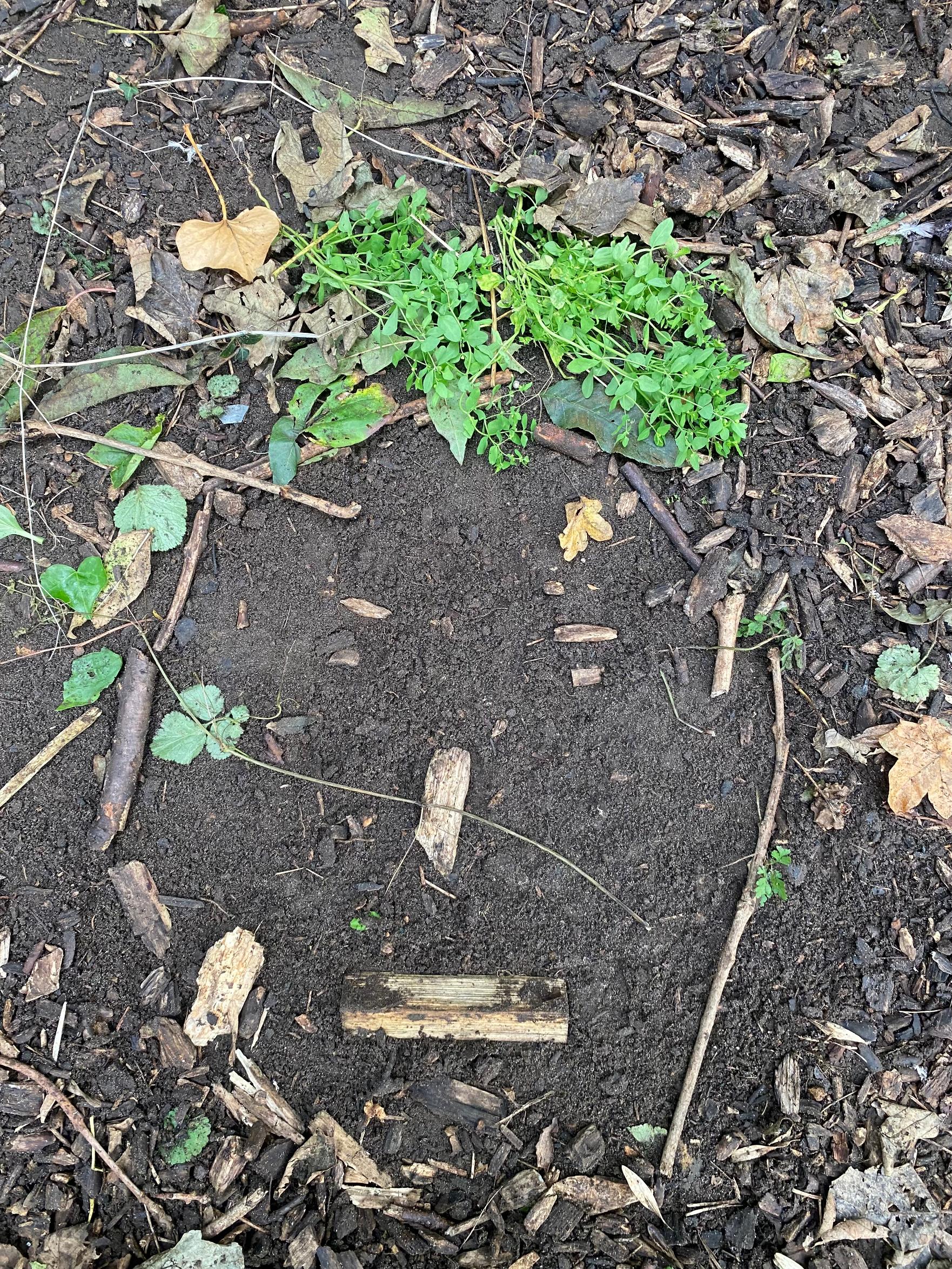
Portraits in the woods
We have been learning about Pablo Picasso. We took a trip down to the woods to make some Pablo style natural portraits.
Comparing numbers
In maths we have been comparing numbers. We love using the base ten to help us.
How can you help at home?
Research has shown that the best support from home is when parents/carers talk to their children about their expectations in school. Encourage your child to listern, work hard, be ready to learn and behave well regulalry and this will have a huge impact on their achievements in school.
One of the most useful and rewarding things you can do with your child at home is to read, read, read!!!
Click on the link to read a booklet with lots of ideas that can make reading at home more fun and includes top tips on how to make the reading experience you have with your child really effective.
Phonics
Please continue to support your child with reading their books and flashcards. Click on the document below and find a list of words for your chld to have a go at reading. Encourage your child to find the phonemes in the word first -they may need to look at their speed sound mats to recall some of them. We suggest doing a page at a time. Are there any that you need to practise?
If you need another copy of the speed sounds mat, or flashcards, you will find them here too.

|
t-l-53541-year-1-reading-with-your-child-parent-advice-booklet ver 4 | [pdf 3MB] |

|
|
|
useful websites | [pdf 1MB] |
|
|
|
Year-1-Phonics Real and Nonsense Word Cards | [pdf 571KB] |
|

|
Speed sounds mat set 1-3 | [docx 273KB] |
|
|
|
Set 2 and 3 Flashcards | [docx 12KB] |
|
|
|
Aliens Assemble nonsense word making game | [pdf 438KB] |
|
The National Curriculum strands we are learning are:
English - Writing
Transcription
I can spell common exception words.
I can name the letters of the alphabet using letter names to distinguish between alternative spellings of the same sound.
I can apply simple spelling rules.
Handwriting
I can form capital letters.
Composition
I can write sentences by composing a sentence orally before writing it.
I can write sentences by sequencing sentences to form short narratives.
I can write sentences by re-reading what I have written to check that it makes sense.
Vocabulary, Grammar and Punctuation
I can leave spaces between words.
I can join words and join clauses using ‘and’.
I am beginning to punctuate sentences using a capital letter and a full stop, question mark.
Maths
Number and Place Value
I can count to and across 100, forwards and backwards, beginning with 0 or 1, or from any given number.
I can count in multiples of twos, fives and tens.
I can read and write numbers from 1 to 20 in numerals and words.
Addition and Subtraction
I can read, write and interpret mathematical statements involving addition (+), subtraction (–) and equals (=) signs.
I can add and subtract one-digit and two-digit numbers to 20, including zero
Fractions
I can recognise, find and name a half as one of two equal parts of an object, shape or quantity.
Measurement
I can sequence events in chronological order using language [for example, before and after, next, first, today, yesterday, tomorrow, morning, afternoon and evening]
I can recognise and use language relating to dates, including days of the week, weeks, months and years
I can tell the time to the hour and half past the hour and draw the hands on a clock face to show these times.
Science
I can identify and name a variety of common animals including bird, insect, reptile, fish, amphibian and mammal.
I can identify and name a variety of common animals including herbivore, omnivore and carnivore.